Date:Feb-03-2026
An SPD (Surge Protective Device), often called a surge protector or lightning arrester, is a critical component installed in your electrical distribution system. Its sole purpose is to protect electrical and electronic equipment from transient overvoltages—sudden, brief spikes in voltage.
These damaging surges can originate from two main sources:
Without an SPD, these surges travel unimpeded through your wiring, degrading or destroying sensitive circuitry in computers, industrial controls, appliances, and HVAC systems.
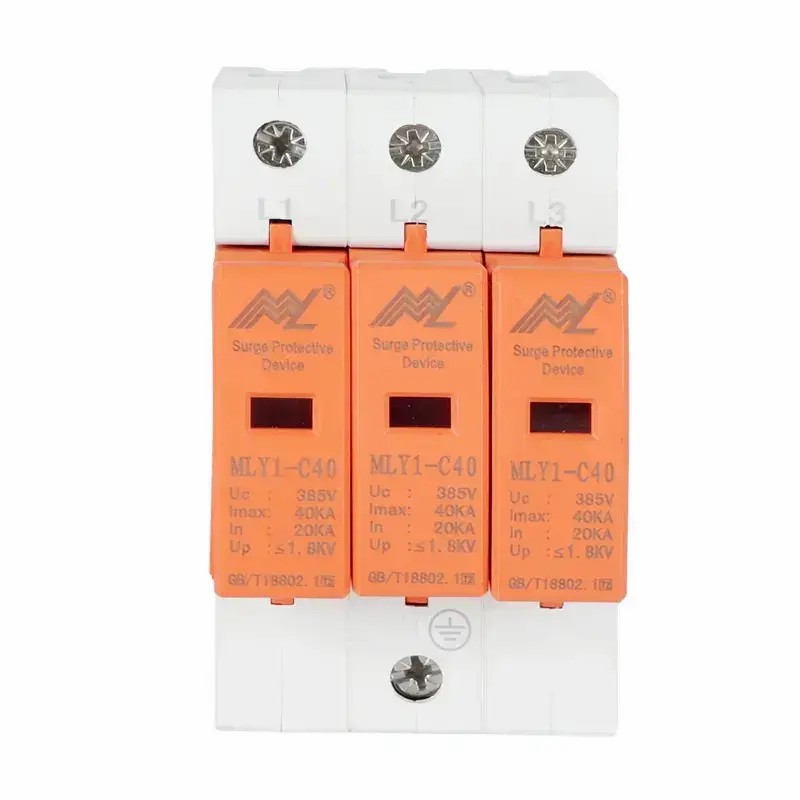
The operation of an SPD is elegantly simple. It is connected in parallel to the power supply circuit it protects. Under normal voltage conditions, the SPD presents a very high resistance and is essentially “invisible” to the system—it does not interfere with regular operation.
When a voltage surge exceeding a predefined threshold occurs, the SPD activates within nanoseconds. Its internal components (like metal oxide varistors or gas discharge tubes) instantaneously switch to a state of very low resistance. This creates a safe, low-impedance path to ground, diverting the massive surge current away from the protected equipment and safely into the earth. Once the surge passes, the SPD automatically resets to its high-impedance state, ready for the next event.
When selecting an SPD for electrical systems, consider these crucial specifications that define its capability:
For robust, reliable protection of low-voltage AC power systems (like TT, TN-S), a Type 2 SPD is typically the core of your surge protection strategy. Companies like Zhejiang Mulang Electric Technology Co., Ltd. specialize in manufacturing a wide range of these essential devices under their MILELE® brand.
A solid example from their portfolio is the MLY1-C40/385 AC SPD. This device is engineered as a Class II / Type 2 surge protector, making it ideal for installation in main distribution panels. With a nominal discharge current (In) of 40kA and a maximum discharge current (Imax) of 60kA, it provides substantial capacity to clamp common and differential mode surges. Its built-in thermal disconnector enhances safety by isolating the module upon failure, and the clear color-coded window (green for OK, red for fault) allows for instant, easy maintenance checks. Complying with international standards like IEC 61643-1, this 4-pole SPD offers a dependable solution for safeguarding three-phase electrical systems against transient overvoltages.
In summary, an SPD is not just an accessory; it’s a necessary investment in the longevity and reliability of your electrical infrastructure. Understanding “what is an SPD” is the first step toward preventing costly downtime and equipment damage caused by unpredictable power surges.
Contact us